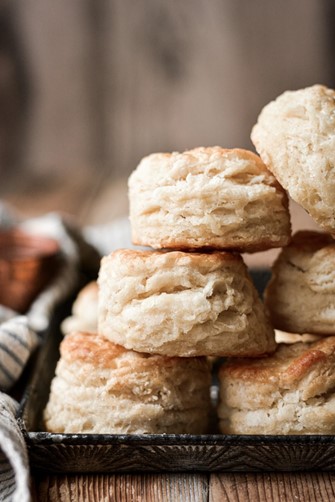
Happy May! Earlier this month, the Colorado Railroad Museum hosted its annual Colorado Crossings event. The theme of 2026’s annual rail event was a Florence & Cripple Creek (F&CC) reunion. To commemorate this theme, we are featuring a recipe that was served in Cripple Creek and on the Pullman cars that ran on the line—baking powder biscuits.
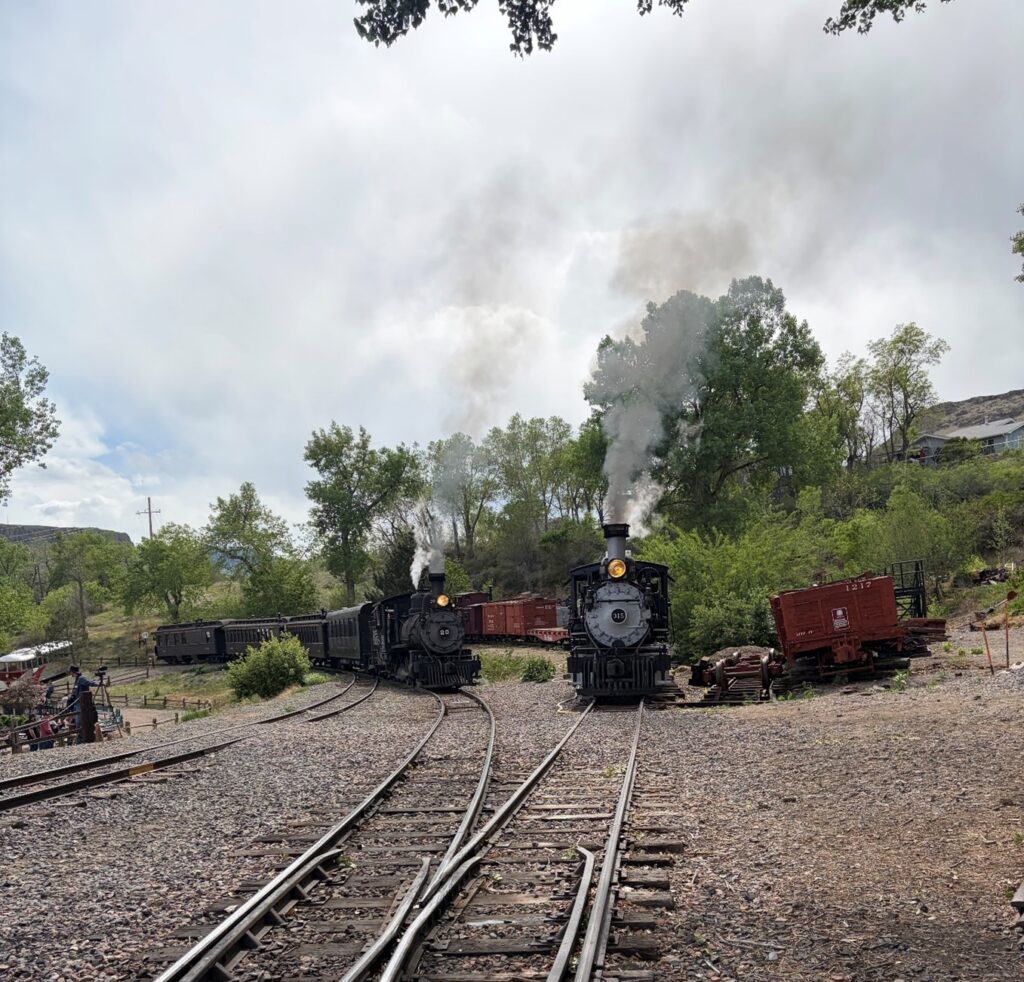
Figure 1 2026 Colorado Crossings event at the Colorado Railroad Museum, with Rio Grande Southern engine No. 20 and visiting locomotive, Denver & Rio Grande Western No. 315, both once ran on the F&CC, photo courtesy Maddie Schaaf.
Before we dive into the history of the railroad’s arrival, let’s discuss Cripple Creek. Established in 1890 after a sizeable gold discovery put the area on the map, by 1894, Cripple Creek had 150 active mines and produced almost $3 million dollars that year alone.
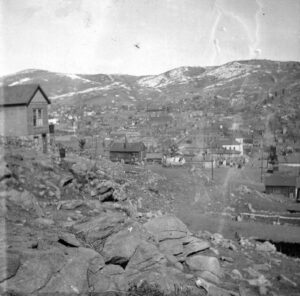
Figure 2 Cripple Creek, 1895-1900, Denver Public Library Western History Collection.
Living in a mining community wasn’t easy, especially before the arrival of railroads. Mabel Barbee Lee detailed growing up in Cripple Creek evocatively in her book Cripple Creek Days. Lee described not only living conditions—where the family lived in a tent before getting a house—but also the dangers associated with sickness in the mining camp, tensions of the labor strikes, and what the arrival of a railroad meant for the community. Mabel was dismayed to discover when she first arrived in Cripple Creek that she wasn’t allowed to play with one of the neighboring girls in her camp. She and her mother Kitty, learned that this was because the tent their family lived in had previously housed a family with a child who died of diphtheria. Mabel did note, however, “that I was immune to most of the diseases that made perennial rounds of the camp, dealing death to the children.”

Figure 3 Mabel Barbee Lee.
In 1894, the railroad arrived at Cripple Creek. The town arrived in large numbers when the first passenger train reached town, and Mabel described the excitement of the town’s children in receiving hard-to-come-by items in their mountain community. The first train brought “potted petunias, geraniums, begonias, and fuchsias; and fresh vegetables of every description; and gunny-sacks heavy with oranges, June apples and bananas.” The treat the children were most excited for was watermelon, which was sent up to them from the children in Rocky Ford, Colorado. “In our eagerness we cracked them open with rocks or dropped them splashing on the ground. We buried our faces in the luscious red pulp, swallowing seeds and all…”

Figure 4 Florence & Cripple Creek (F&CC) first train into Cripple Creek, July 1st, 1894.
The arrival of the railroad didn’t signal happiness to everyone. Kitty, Mabel’s mom, noted that “I don’t think one train or a dozen coming to this miserable place is going to make it any more bearable. A mining camp is a man’s world; it means a hard, lonely life for a woman.”
Regardless of the difficulties of mining camp life, the arrival of the railroad did serve to connect Cripple Creek with the rest of Colorado and made the transport of ore to mills easier while allowing passengers to experience the beauty of the mountains. Only two months after the F&CC reached Cripple Creek, the railroad produced tourist brochures. In just three years, the mining camps became tourist towns. F&CC initially leased locomotives from the Denver & Rio Grande (D&RG) railroad, though shortly after its inception, the railroad commissioned locomotives for service. One of these locomotives was the Colorado Railroad Museum’s own locomotive No. 20, which was sold to the Rio Grande Southern after the F&CC ceased operations in the ‘teens.
Figure 5 “The Gold Belt Line” logo used on the F&CC.
Narrow Gauge Pullman Hotel Cars were used on the Denver & Rio Grande (D&RG) line, transferring at Florence to the F&CC line, providing service to Cripple Creek from Denver in the early years. Trains were offered three times daily from Denver to Victor and Cripple Creek via Pueblo and Florence. This “Cripple Creek Special” advertised use of “Pullman Palace Sleeping Cars, Free Reclining Chair Cars, and Elegant Day Coaches” (see figure 6).
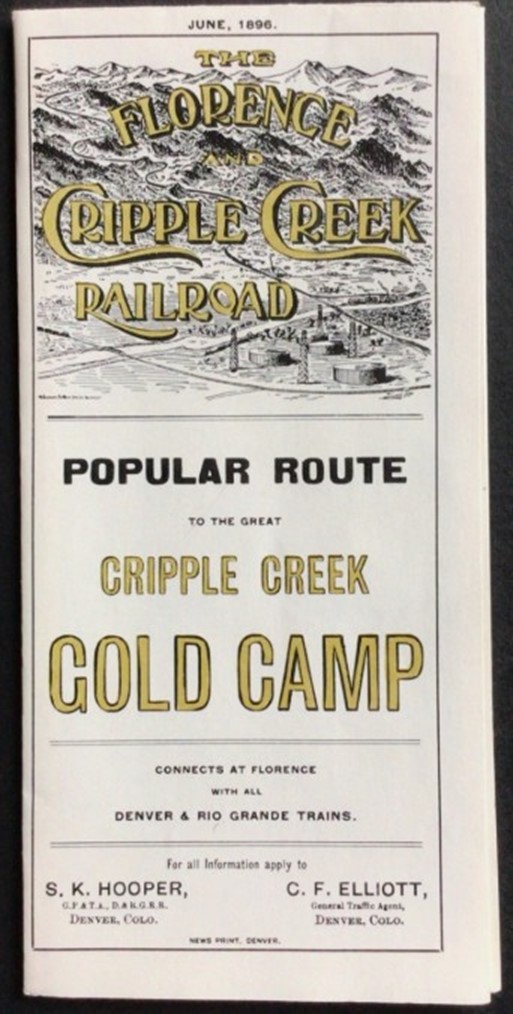
Figure 6 F&CC brochure, 1896.
The F&CC lasted only two decades before the line closed. The route was a flood-prone one, with floods washing out parts of the track from its construction all the way through 1912. By 1912, when the line was significantly damaged in Phantom Canyon, F&CC faced declining ridership and standard gauge competition from two other railroads. The decision was made that rebuilding the line would not be cost-effective.
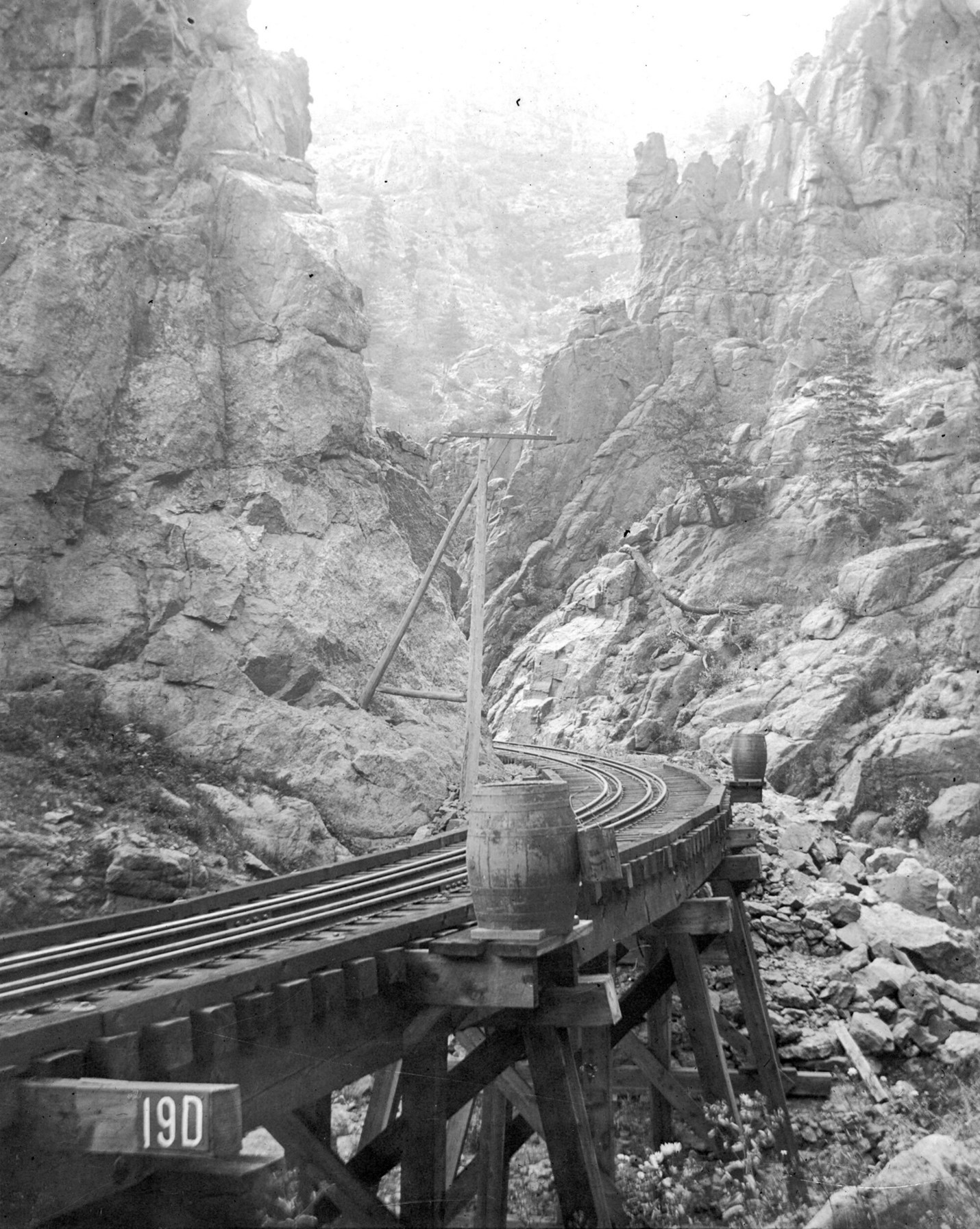
Figure 7 F&CC trestle in Phantom Canyon, 1895. Denver Public Library, Western History Collection.
We hope you enjoyed our brief history of the Florence & Cripple Creek Railroad, Pullman sleeper service, and the Cripple Creek Gold Rush. On May 16th and 17th of 2026, during the Colorado Railroad Museum’s Colorado Crossings event, three locomotives that previously served along the Florence & Cripple Creek reunited in service—locomotives Nos. 20 and 315, while another, No. 318 was statically displayed.

Figure 8 F&CC alumni engines Nos. 20, 318, and 315 at the Colorado Railroad Museum, 2026 Colorado Crossings event. Photo courtesy of Maddie Schaaf.
Today’s recipes come from The Rocky Mountain Cook Book by Caroline Trask Norton and The Pullman Reportory. When Mabel Barbee Lee and her family first joined her dad in Cripple Creek, her mom made dinner. “By suppertime the tent smelled appetizingly of steaming coffee, hot baking-powder biscuits and fried sowbelly.” In addition to the baking powder biscuits being served in Cripple Creek before the arrival of the railroad, the dish would likely have been served aboard the Pullman cars traveling the F&CC. Please let us know if you try any of the recipes, and if you missed the 2026 Colorado Railroad Museum’s Colorado Crossings event, make sure to check out the Museum’s other events as the summer season progresses.
Pullman Company Repertory Baking Powder Biscuits
2 Cups Flour
½ teaspoonful of Salt
4 Teaspoonfuls of Baking Powder
½ Cup Shortening (Butter or Lard)
¾ cup Milk
Sift the flour, salt and baking powder together. Add shortening and work with fingers until well-mixed. Make a hole in center of flour, pour in milk – work swiftly into flour. Turn the dough on lightly floured board – knead for a few seconds and roll dough with rolling pin to thickness of about ½ inch. Cut with biscuit cutter and place on baking sheet. Place in hot oven and bake for about 15 minutes.
The Rocky Mountain Cook Book Baking Powder Biscuits
2 cups white flour.
½ teaspoonful salt.
2 teaspoonfuls baking powder.
2 tablespoonfuls butter. (Lard can be used if wished).
Milk to make a soft dough
Sift flour, salt, baking powder together, rub in the butter, add the milk gradually, cutting it in with a knife. Turn onto a well-floured board, knead it quickly to get in shape. Roll out half an inch thick. Cut in biscuits and bake in a hot oven at once.