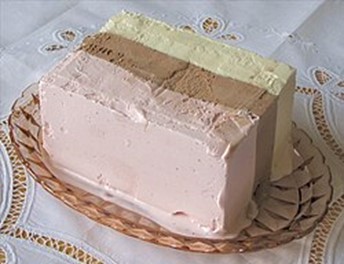
Happy February! For this month’s dining post, we decided to feature a little history of the romantic February holiday, Valentine’s Day, along with information on how railroads played a part in delivering Valentines and mail in general! To accompany this sweet history, we are featuring a sweet treat that was served on Denver & Rio Grande (D&RG) dining cars: Neapolitan ice cream. This is a particularly fitting treat for the unseasonably warm winter we have been experiencing in Colorado.
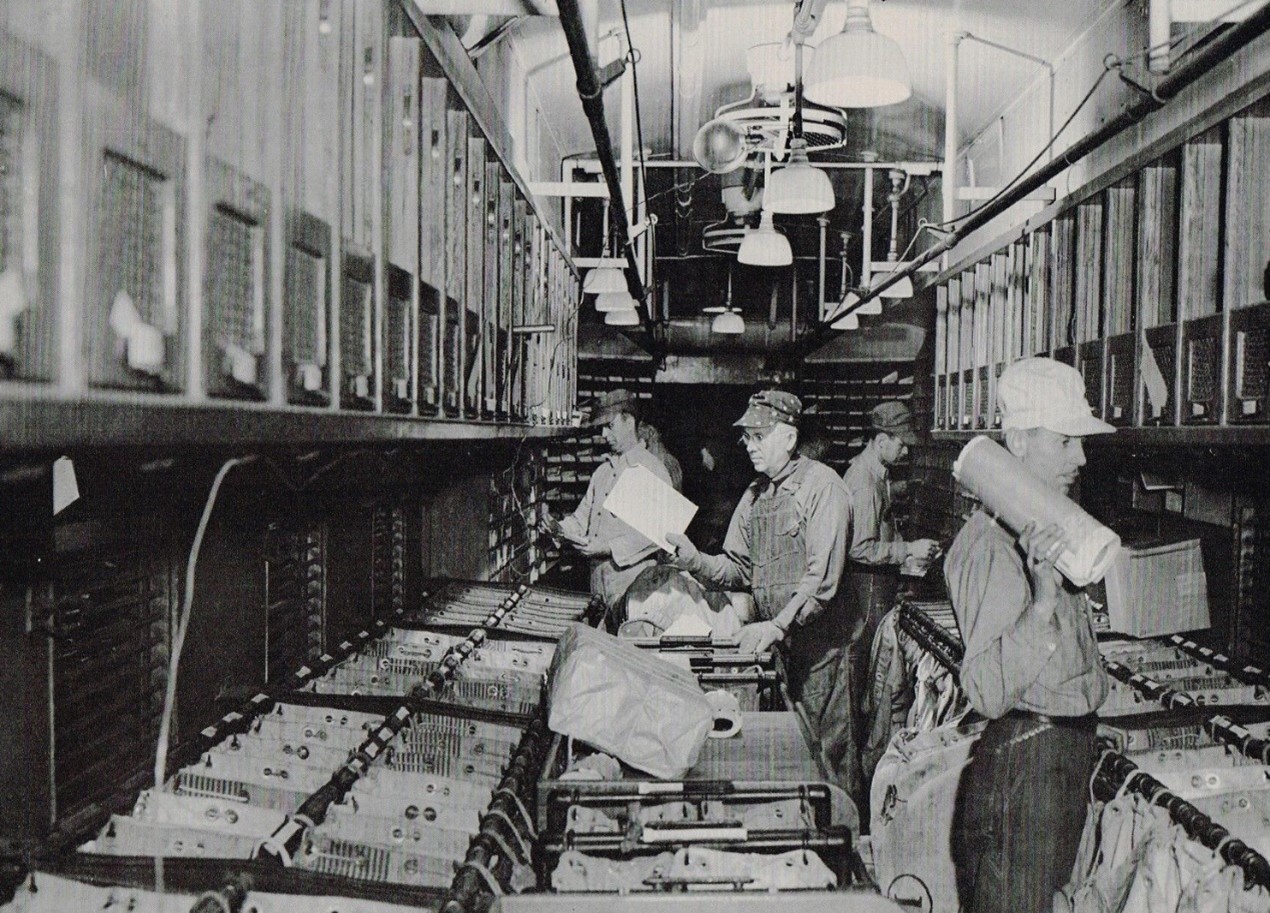
Figure 1 Railway Post Office car.
What is Valentine’s Day exactly, and why is it a celebration of love in February? Well, as with many things that have their roots in ancient times, the exact history isn’t clear. The Catholic Church recognizes multiple St. Valentines, a couple of whom were martyred during emperor Claudius II’s reign, though sources disagree on who the actual patron saint of lovers is. St. Valentine’s Day was declared at the end of the 5th century by Pope Gelasius, though it wasn’t until later it became associated with love. Valentine greetings themselves date to the Middle Ages, and Americans exchanged Valentines as early as the 1700s. Mass produced Valentine cards became popular beginning in 1900, due to printing technology, and distribution was convenient with the postal systems and cheap postage.

Figure 2 Vintage Valentine card, featuring a locomotive, Newberry Library collection.
How do Valentine’s Day and trains go together? Through the Railway Post Office (RPO)! In the Colorado Railroad Museum’s collection is a Valentine postcard sent by rail, via the Denver & Leadville RPO on February 14th, 1911. The U.S. Post Office shipped mail via train as early as railroads were constructed in the U.S., but it wasn’t until 1864 that the Railway Mail Service was established. As railroads expanded across the United States, it became clear that railroads would play a pivotal role in delivering mail. At first, bags of mail were transported by rail and then taken to a post office to be sorted. The postal service realized, however, that it would be more efficient to bring clerks aboard the postal cars and sort the mail in transit.

Figure 3 Valentine postcard, Colorado Railroad Museum collection, 1911.
Railway mail clerks had one of the most dangerous jobs in the postal service. For efficiency, trains did not stop at every station and the clerks reached out from the moving car to grab mail bags. The clerks faced dangers that all passengers and crews on trains faced at the time, including the use of woodstoves and oil lamps in their wooden train cars (the primary construction material until the early years of the 20th century), and the dangers faced from derailment and wrecks. For operational reasons mail cars were located between the locomotive and passenger cars which often resulted in the worst impacts during wrecks. From 1890 through 1900, there were more than 6,000 accidents involving trains that had mail cars, and over eighty mail clerks died as a result. In addition to the dangers posed by wrecks, mail trains were a tantalizing target for thieves. In 1904 one mail clerk lost his life when a train robber shot him. By the 1920s, the postmaster general armed these postal employees.
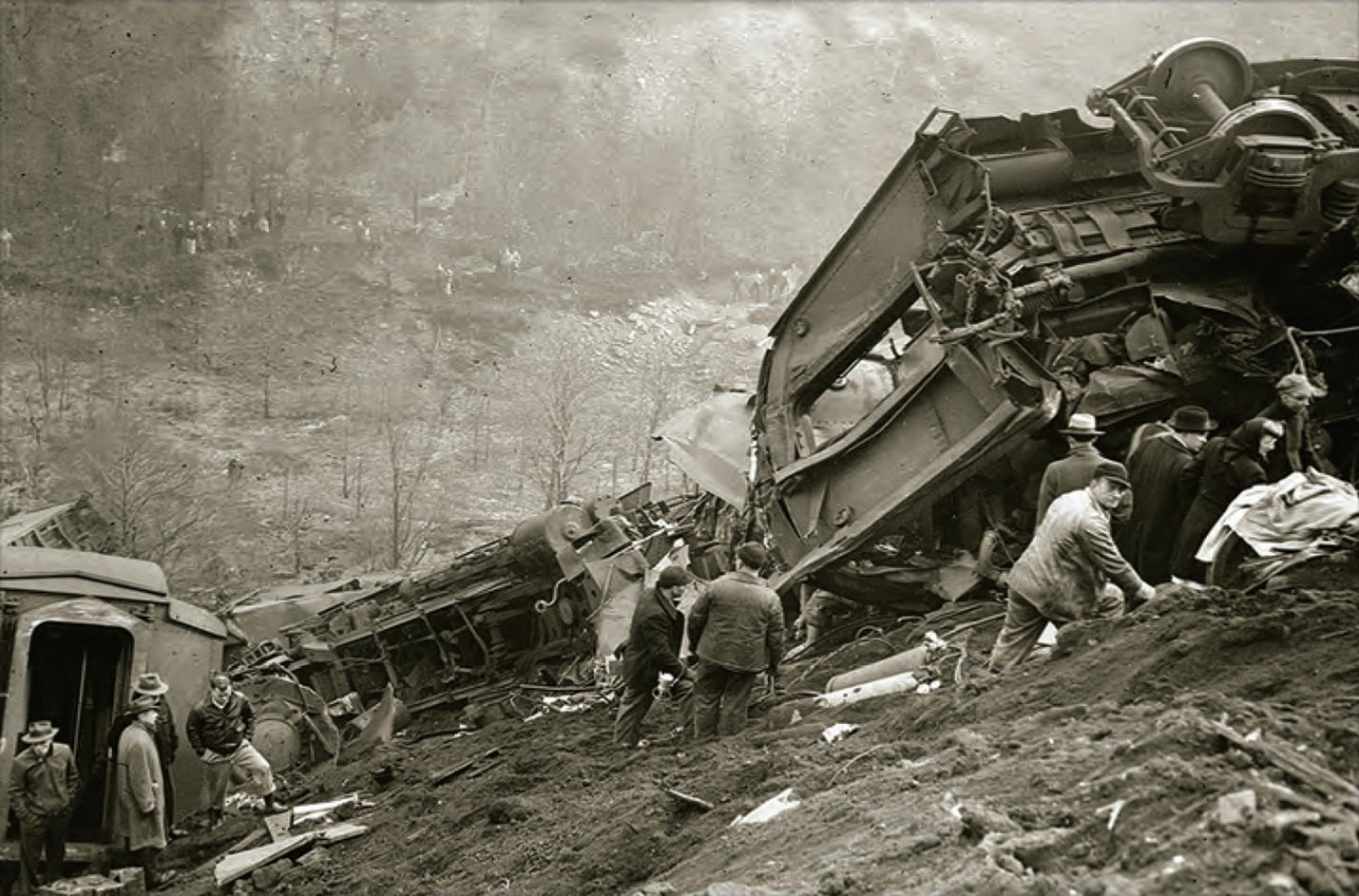
Figure 4 A train wreck in Pennsylvania 1947 killed six mail clerks. Smithsonian National Postal Museum Collection.
Various rail lines had contracts with the Railway Mail Service to transport mail, including the Denver & Rio Grande (D&RG) which is the railroad that transported mail to Salida, Colorado where the recipient of the 1911 Valentine’s Day postcard lived. As passenger traffic declined with the availability of automobiles and air travel, mail service on the railroads declined too. The last railway post office route ended on June 30th, 1977.

Figure 5 Valentine postcard with Denver & Leadville stamp, CRRM collection, 1911.
Neapolitan ice cream is sourced from the people of Naples, and became popular in Europe and America in the 19th century. This ice cream features three flavors: chocolate, vanilla, and either strawberry or pistachio. Neapolitan ice cream was served aboard Denver & Rio Grande passenger trains in the early 20th century (see figure 6). Today’s recipe comes from The Rocky Mountain Cook Book by Caroline Trask Norton, first published in 1903.

Figure 6 Denver & Rio Grande (D&RG) dining car menu featuring Neapolitan ice cream, 1908.
We hope you enjoyed our brief history of Valentine’s Day, our feature of the Museum’s very own vintage Valentine, and the history of Railway Post Offices. If you try the recipe, let us know on our social media channels, or in the comments below!
The Rocky Mountain Cook Book
Vanilla Ice Cream
4 cups of cream.
1 cup of sugar.
1 tablespoonful of vanilla.
1 egg.
Beat the egg until foamy, then beat in the sugar, add flavoring and cream; freeze
Neapolitan Ice Cream
Make a vanilla ice cream; pack one-third of it in a mould. Mix one square of Baker’s chocolate with another third; pack that in the mould; add a teaspoonful of almond to the last third and color green with coloring paste; pack smoothly over the chocolate, cover the mould securely; pack in ice and salt for two hours.