
As we approach the end of summer, and our gardens yield their produce, we’ve decided to feature an in-season refreshing tomato summer salad with a French dressing. Alongside this summer treat, we are also featuring the history of tomatoes in Colorado and the United States along with the “Fruit Belt Route” in Grand Junction.
When plans for an electric railway between Fruita and Grand Junction, Colorado, were announced, the town of Fruita saw an expansion. With this electric line connecting the two communities, it became possible for residents of Fruita to commute to Grand Junction. In 1910, this dream became a reality with the Grand Junction & Grand Valley Railroad, which went by the slogan “Fruit Belt Route” while being known locally and quite simply as the Interurban.

Figure 1 Interurban car traveling on “Fruit Belt Route” in 1910. Photo courtesy of the Library of Congress.
Not only did the “Fruit Belt Route” carry passengers, but it also became a useful way for fruit, vegetables, and freight to be transported. Passengers included students commuting to Appleton School and sightseers visiting nearby orchards.
With the plethora of fruit and vegetables farmed on the Western Slope, canning companies began to pop up. The Currie Canning Company was founded in 1911 by Arthur Currie in Grand Junction, and by 1920 was one of the 20 largest canning operations in the United States. The company routinely requested additional labor for help during their busy seasons, including calling on women to help during the apple season in 1917. In September 1921, an early frost warning led to a large surplus of tomatoes delivered to the factory that according to the Montrose Daily Press yielded “25,000 small cans of tomatoes, 3,700 balloon cans, and 1,600-gallon cans of ketchup.”

Figure 2 Looking into the fruit orchards of Grand Valley and Grand Junction, Colorado, 1908. Photo courtesy of Denver Public Library, Western History Collection.
The company had contracts with local farmers to provide tomatoes and in 1922 it was upset that the farmers in the area were neglecting their tomato patches (see figure 3). A notice published in the local paper mentioned that tomatoes needed to be dropped off either at the factory directly or “the interurban station mentioned in your contract” noting the use of the “Fruit Belt Route” for farmers getting their produce to the factories.

Figure 3 Notice to Tomato Growers, published in The Mesa County Mail, September 28, 1922.
Despite larger plans of extending the line to Palisade, Mesa, and Collbran, and even connecting the line farther west to join the Uintah Railway, the line remained a 12-mile link between Fruita and Grand Junction. With the rise in popularity of automobiles and paved roads, the electric line struggled financially. Passenger service ended in 1928, while fruit and other freight continued to be hauled until the line’s end in 1935.
Now that we’ve seen how tomatoes were grown in Colorado during the early years of the 20th century, let’s talk about how they came to the state. Tomatoes were first cultivated by Mesoamerican people in the 1500s before the Spanish brought them to Europe. In the early 1700s, colonists brought the plant to the United States, but it didn’t gain widespread popularity until the early 20th century. The advent of canning in Colorado spurred the popularity of tomatoes, but tomatoes were (and continue to be) widely grown across the United States.

Figure 4 Sixteenth century representation of a tomato, Pietro Andrea Mattioli.
Of course, the “Fruit Belt Route” wasn’t alone in hauling tomatoes. In 1927, a “Tomato Special” train of the Florida East Coast Railway carried 103 cars “gliding swiftly over the shiny rails, a mile-long train packed with luscious, juicy Florida tomatoes for Northern markets” (figure 5). According to The Fort Morgan Times article from June 14th, 1927, at the height of tomato season, a special freight train departed every day from the Hialeah district carrying 105 freight cars full of tomatoes that traveled first to Jacksonville, Florida before going farther north and dispersing across various states/markets. “Giant tomatoes” riding aboard railroad flatcars were a popular subject of early 20th century postcards as well.

Figure 5 Fort Morgan Times article featuring the “Tomato Special” train in Florida, published June 14, 1927.

Figure 6 Postcard depicting “Giant tomatoes” riding aboard a Southern Pacific Railroad flatbed car, 1910.
Why tomato salad? As long as the crop has been around, people have been putting them in their salads. The earliest salads were consumed by the ancient Romans and Greeks, though recipes over time have changed as more ingredients have become available. As more advanced refrigeration technology became available in the U.S. through the railroad, salads were an easy dish to serve on dining cars year-round.
Today’s salad recipe comes from the Pullman Company Repertory for Commissary Employees, first published in 1936. The French Dressing recipe comes from a Union Pacific recipe card featuring a chef’s special salad bowl, in the Colorado Railroad Museum’s collection. If you try the recipe, let us know in the comments below or on our social media channels!
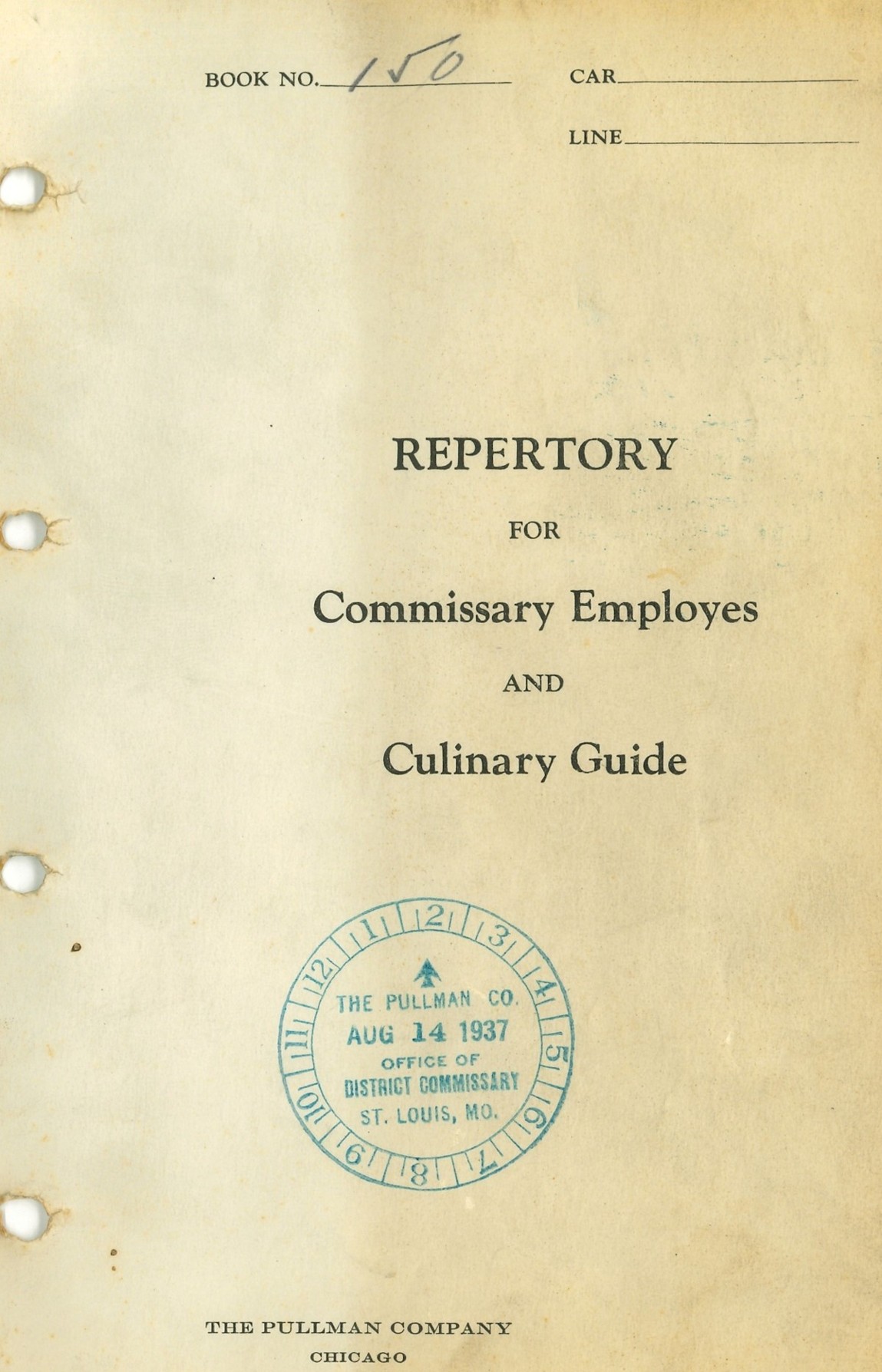
Figure 7 Cover page of Repertory for Commissary Employes and Culinary Guide, first published in 1937, Colorado Railroad Museum Collection.

Figure 8 Union Pacific French dressing recipe, Colorado Railroad Museum collection.
Pullman Company Head Lettuce and Tomato Salad Bowl
Take a well-chilled head of lettuce, wash thoroughly and remove core. Use some of the good outer leaves to line bowl. Cut head lettuce in half and place one half in nest of leaves.
Use one medium well-chilled ripe tomato. Scald a few seconds with boiling water and peel. Remove core and cut in half, lengthwise. Cut each half in three equal pieces and arrange neatly on top of lettuce.
If available, place in center of salad a small bunch of chilled watercress, or a radish rose.
Serve bowl on medium size plate. Underline with doily. Place wooden fork and spoon on side of salad, as illustrated.
Serve, separately, in sauce boat, French Dressing and four double saltine crackers. Butter on butter chip [plate].
Union Pacific Railroad Company French Dressing
1 small clove Garlic
½ cupful Cider vinegar
½ cupful Olive oil
1 cupful domestic salad oil
½ tablespoon salt
Preparation:
Remove the hard outside skin from clove of garlic. Chop the garlic fine and crush with salt, mixing thoroughly. When well blended, add the vinegar and oils, beating well with egg whip. When well beaten, strain the dressing through a small strainer to remove the larger pieces of garlic and store in refrigerator in glass bottle or jar.
Dressing should be thoroughly mixed before each use.