
Happy June! 2026 marks the 150th anniversary of Colorado’s statehood, and June 21st-27th is Colorado Rail Heritage Week. Without railroads, Colorado would not have achieved statehood when it did. The railroads were instrumental in connecting Colorado with the nation, and in bringing products from Colorado’s major industries to market. This history is explored in the Colorado Railroad Museum’s newest exhibit—Creating Colorado by Rail: 150+ Years of Mining, Agriculture, and Tourism. This blog post features some of that rich history with a focus on railroad tourism on the Moffat Road. As a dining option, we are sharing a historic ham sandwich recipe—perfect for a mountain excursion.

Figure 1 Creating Colorado by Rail exhibit in the Museum’s upper gallery.
Before we discuss excursions, let’s talk about the history of Moffat Road. The Denver, Northwestern & Pacific (DN&P), or Moffat Road, was created by David Moffat in 1903 with the intent of providing a rail route from Denver to Salt Lake City, Utah. Moffat intended to create a tunnel through the base of the Continental Divide to serve as a direct path through the mountains. Though Moffat wasn’t alive to see the completion of the tunnel, the route did reach Steamboat Springs by 1909. By 1913, despite financial difficulties, the railroad reached Craig, Colorado. The Moffat Road’s path through the mountains was a scenic one crossing the divide at Rollins Pass, and summer excursions were popular.

Figure 2 Moffat Road route published in The Moffat Road US national forests brochure, ca 1960s.
The Rocky Mountain News published a description of an excursion the Colorado Editorial Association took on the Moffat Road to Hot Sulphur Springs in 1907. The writer, Alvin T. Steinel, noted that “language is inadequate to describe the delights of a journey over the Moffat road.” He described the journey including the scenery “presenting a vista of lake and timber dotted plain that grows broader as the train ascends and grander with each successive view.” Lunch at the first stop in Tolland included “delicious sandwiches and hot coffee” that the group had only ten minutes to eat. Though the group stopped in Arrow and dined at the station there, Steinel did not record what the group ate.

Figure 3 Colorado Editorial Association journey description along the Moffat Road, Rocky Mountain News 1907.
There were a couple of towns along Moffat Road that had dining rooms, including one in Arrow and another in Corona Station. As the train stopped, passengers would disembark, go into the station to eat a quick meal, then get back on the train. Though there are photos of these dining stations, we could not find menu exampleslisting what would have been served. If you have any information on dining while on the Moffat Road, we’d like to hear from you!
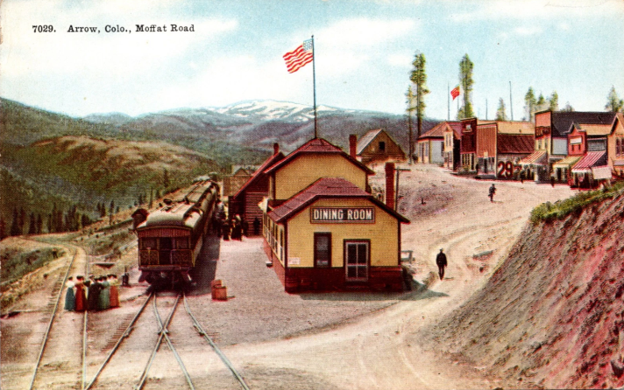
Figure 4 Arrow, Colorado dining room postcard.

Figure 5 Dining room in Corona on the Moffat Road.
The logistical challenges of serving meals at these dining stations are clear in a Rocky Mountain News article from 1911 calling for “Cafateria Cars” that they were considering putting on the trains for the Moffat Road. The article notes that “in the big summer rush with special excursions, the dining rooms and lunch counters along the line…often have been cleared of food before all had eaten.” Though these cars were not added, the article still illustrates the difficulty of food on these excursions.

Figure 6 Rocky Mountain News article, 1911.
Following the completion of the Moffat Tunnel in 1928, the Moffat Road route over Rollins Pass was abandoned. Today’s recipe comes from The Rocky Mountain Cookbook, first published in 1903. If you try the recipe, let us know in the comments below, or on our social media channels. The Museum’s new exhibit Creating Colorado by Rail will be on display through January of 2027.
Rocky Mountain Cook Book Sandwiches
Sandwiches, like salads, can be made in great varieties, only care and thought must be taken in selecting the combinations.
Sandwiches can be made from white, brown, graham bread, fresh rolls, crackers, etc., and may be cut in any shape, with or without the crust. To many the most appetizing part of the bread is sacrificed when the crust is removed.
Some of the shapes may be cut in squares, rounds (with a biscuit cutter), triangles, hearts or rolled. To keep sandwiches moist cover with a damp napkin. The butter for sandwiches can be either salted or unsalted, and should be creamed before spreading, as it then will spread evenly without breaking the bread. Seasoning of chopped mint leaves or parsley, spinach juice that has been crushed and pressed through a cloth, a little tarragon vinegar, onion juice if cared for, capers, pickles, nasturtiums, or olives finely chopped can be added to the butter.
Cut the bread in very thin slices, trimming off the crust before slicing, the crust and the trimmings can be dried for crumbs. Have the slices fit evenly one upon the other. Bread for sandwiches should be fine grained and a day old. Rolls used for sandwiches should be fresh and small.
Meat Sandwiches
Spread the bread with butter or mayonnaise, or mix the meat with mayonnaise. A crisp lettuce leaf or watercress can always be used with the meat; chop chicken and celery together, mix with mayonnaise or fresh dressing. Thinly sliced meat of any kind, seasoned with salt and pepper, and mustard if ham is used; spread over with mayonnaise or French dressing, if liked. Meats chopped or pounded to a paste, mixed with hard-boiled eggs, mashed, a little cream, season with salt and pepper, and if you like, a little onion juice.
Chopped Ham Sandwich
Chopped ham mixed with mustard, a little cream or mayonnaise, and a little chopped pickles or olives.