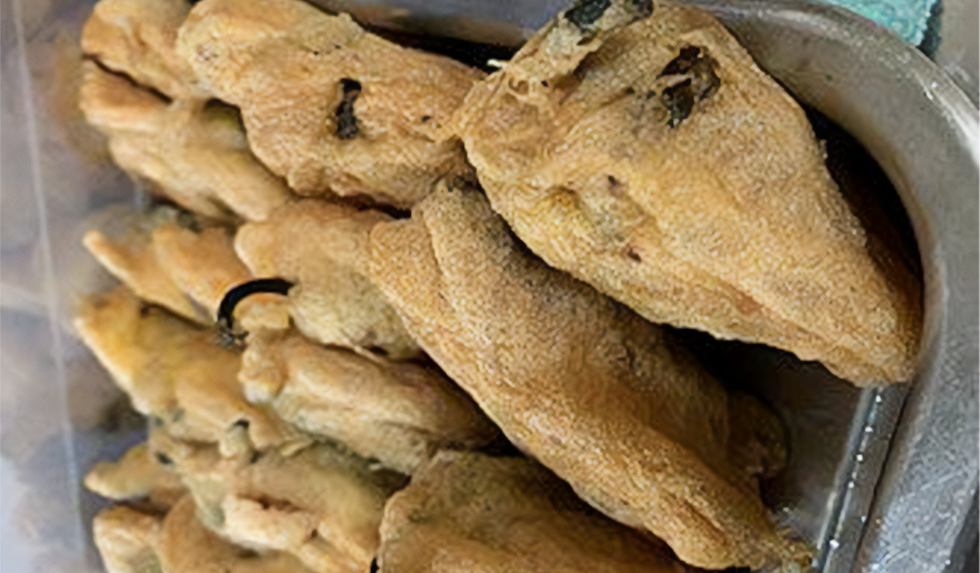
Happy September! September 15th through October 15th of 2025 is Hispanic Heritage Month, and to commemorate that, and an all-new Museum exhibit opening in October, we are featuring La Fonda chiles rellenos and frijoles refritos along with the history of the traquero and bracero railroad programs for this month’s dining adventure.

Figure 1 La Fonda Harvey House, Santa Fe, New Mexico.
From the 1880s through the 1930s, and then during World War II, there were two pushes to bring laborers from Mexico to work on American railroads. The two groups became known as traqueros and braceros. The primary role of these two groups of laborers was to build and maintain railroad tracks across America. Traqueros were especially vital as a form of labor due to the shortage of labor caused by the Chinese Exclusion Act, which was passed by the United States in 1882.

Figure 2 Santa Fe Railway traqueros, image courtesy Chillicothe Historical Society.
Railroads encouraged traqueros, or Mexican track workers, to bring their families along in hopes the workers would remain. Traqueros and their families often lived in boxcar communities. Priority housing was given to traqueros with families, but boxcar living presented unique challenges. Soot from steam locomotives stained the laundry, the lack of temperature control meant that the interiors of the boxcars could be exceedingly hot or excruciatingly cold, and for single men laboring as traqueros, there were many men crammed into small boxcars where pests ran rampant.
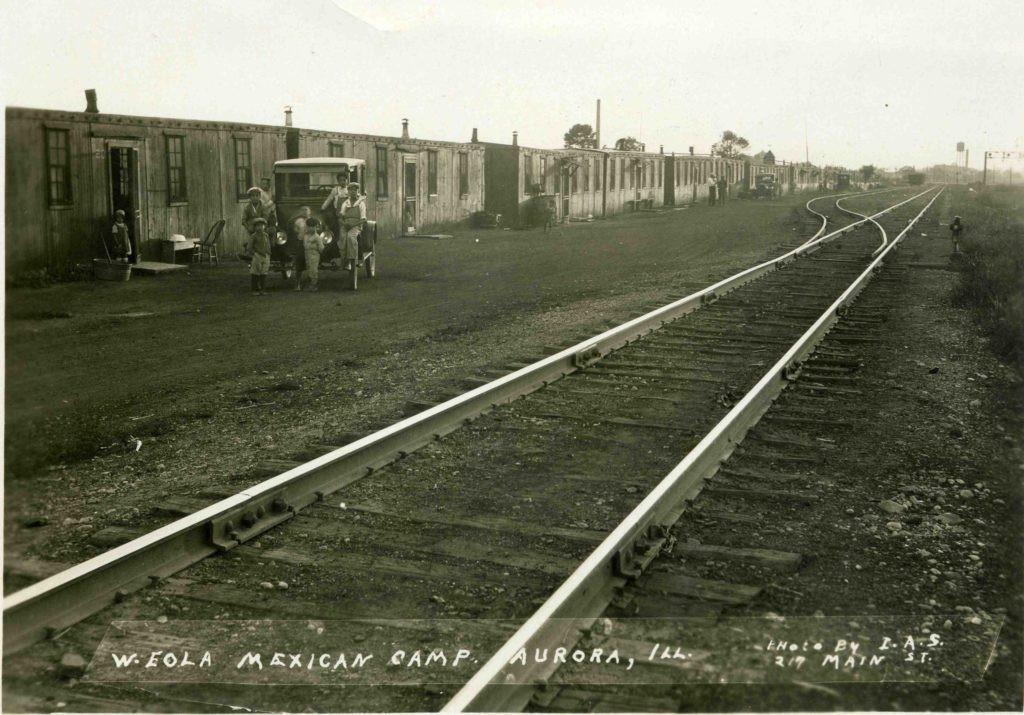
Figure 3 Boxcar community, Aurora, Illinois.</em<
As male citizens of the United States were sent to fight during World War II, there was a labor shortage in many industries, including the rail industry. The United States initially attempted to fill that void with women and college professors, who were exempt from service, but there still weren’t enough laborers. One of the often unmentioned facets of the bracero program, which primarily addressed labor shortages in agriculture, also sent laborers over for the railroads. Unlike the traquero program, which allowed families to come into the United States together, braceros came over alone, without family support, and competition for the jobs was high. Like traqueros, the living situation for braceros was challenging. No temperature control, pests, and the lack of bathing facilities. For both traqueros and braceros, living near railroad tracks was also dangerous.

Figure 4 Braceros waiting to enter the Monterrey Processing Center, Mexico.
Food was an important cultural method of expression, and one of the many challenges facing traqueros and braceros in the United States. It was not uncommon for either group of laborers to walk off a job if the food they were served wasn’t up to their standards. Braceros endured gastrointestinal issues from the change of diet in the United States. Braceros had to take turns sharing a single stove in crammed quarters to make their own meals. To address the problem of food, Chinese Mexicans were brought on as chefs for braceros. The United States brought Chinese Mexicans to the U.S. to cook for the laborers in hopes of preventing unrest from bringing more Mexican laborers. The Chinese Mexican chefs, however, endured racism from all sides.
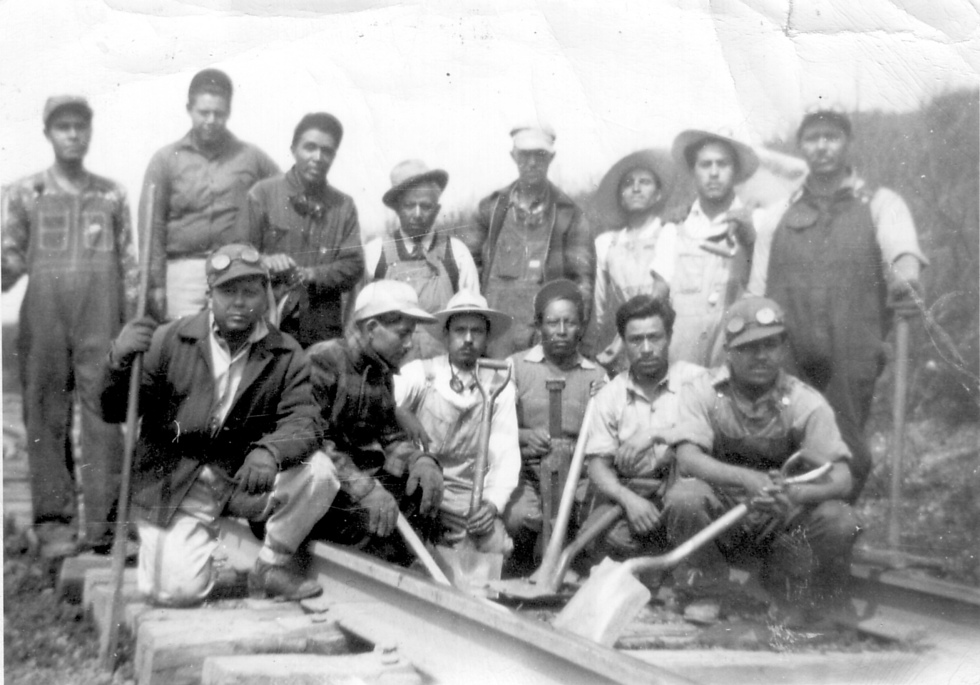
Figure 5 Bracero railroaders, Phoenix, Arizona, 1944.</em?
Food as a cultural expression was a two-way street, and passenger trains and Fred Harvey Houses in the American Southwest saw Mexican-inspired dishes served to patrons in direct response to the cultural influences traqueros and Mexican American communities inspired. One example of this, and where our featured recipe comes from, is the La Fonda Harvey House in Santa Fe, New Mexico. La Fonda was purchased by the Atchison, Topeka & Santa Fe (AT&SF) railroad in 1925, during the time traqueros were laboring on U.S. railroads, then refurbished and reopened in 1929. The head chef of the restaurant at La Fonda was Konrad Allgaier, who cooked recipes designed to reflect the location of the hotel— inspired by the cultural influences of the area—particularly the Mexican and Mexican American influences.
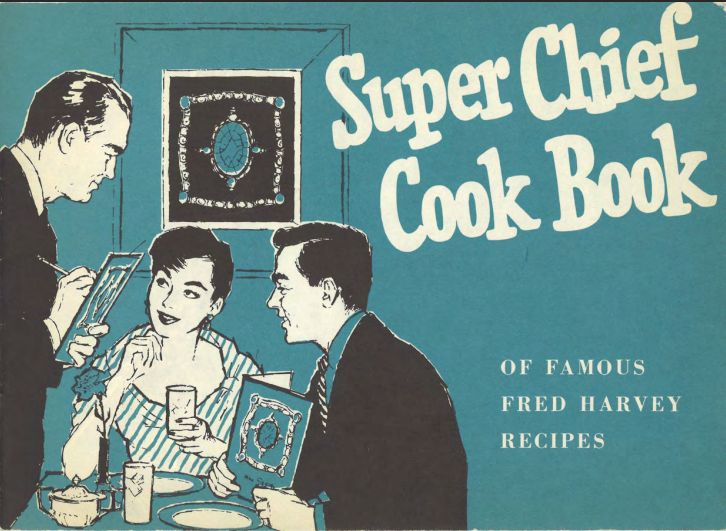
Figure 6 Super Chief Cook Book, where chef Konrad Allgaier’s chiles rellenos and frijoles refritos were published, 1950s.
Chiles rellenos, translated to stuffed chiles in English, dates to 16th century Mexico. Frijoles refritos, refried beans in English, have deep roots in Ancient Mesoamerica where Indigenous peoples cultivated beans as a food source. As the Spanish colonized the region, they brought different foods with them, including oil and lard which is what the beans became fried in. Over time, both dishes became staples of Mexican cuisine and traveled to the United States.
We hope you have enjoyed our brief history on traqueros and braceros, the Mexicans and Mexican Americans who labored on American railroads. On October 14th, the Colorado Railroad Museum is unveiling a new exhibit, Traqueros: Mexican Trackworkers and the American Railroad. Make sure to come see the new exhibit, and let us know if you try any of the featured recipes!
Chiles Rellenos A La Konrad
Ingredients
8 canned Ortega chili peppers
½ cup grated aged American cheese
½ cup flour
1 egg, beaten
Butter
Directions
Fill each chili pepper with 1 tablespoon grated aged American cheese. Roll in flour, dip in beaten egg, roll again in flour. Brown in butter
Frijoles Refritos, La Fonda
Ingredients
2 cups Pinto beans
4 slices bacon, diced
2 small cloves garlic, crushed
1 teaspoon finely chopped onion
¼ teaspoon finely chopped chili pepper
1 teaspoon salt
Grated Parmesan cheese
Directions
Wash beans and soak over night in cold water to cover. Add bacon, cover, heat to boiling and simmer for 4 hours. Drain and cool. Add garlic, onion, chili pepper, and salt, mix well, mashing slightly with a fork. Cook in shallow fat as for hashed brown potatoes. Serve with grated Parmesan cheese sprinkled over the top. Yield: 6 servings.


Great!