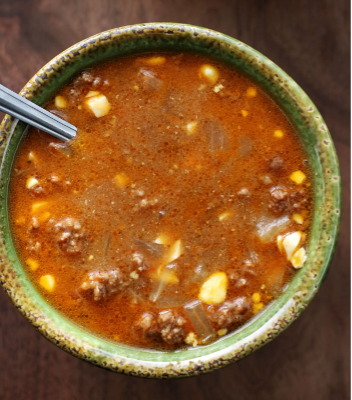
Happy December! For this iconic holiday month, we are featuring mock turtle soup along with the history and holiday rates on the Denver & Rio Grande (D&RG), and later Denver & Rio Grande Western (D&RGW) railroads.
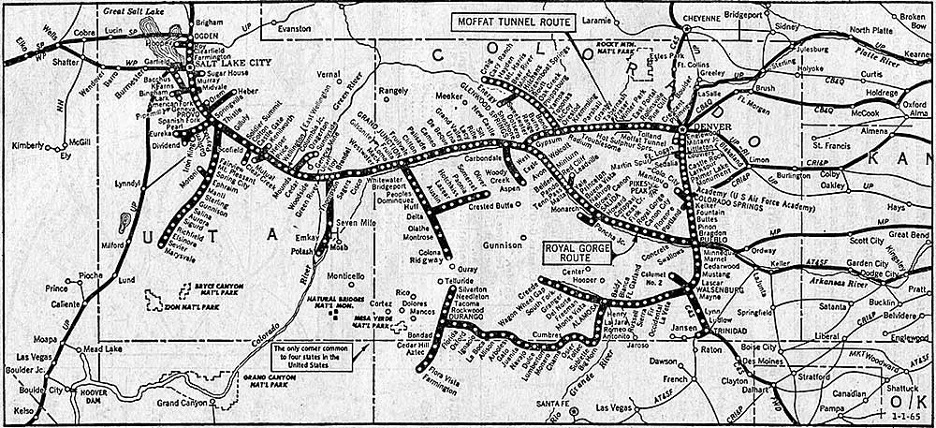
Figure 1 Denver & Rio Grande Western route map.
Let’s dive into the history of Denver & Rio Grande. The Denver & Rio Grande Railway was founded by General William Jackson Palmer and incorporated in October 1870. Originally intended to link Colorado to Mexico and the major transcontinental lines north and south of the state, it ended up being a western railroad instead. In 1881, Palmer created the Rio Grande Western Railway to continue his push westward via rail. The two railway lines met in Utah in 1883. In 1901, the two railroads merged, and in 1921 when the combined road entered receivership following World War I, it became the Denver & Rio Grande Western (D&RGW) railroad.

Figure 2 William Jackson Palmer, founder of Denver & Rio Grande Railway.
Both D&RG and successor D&RGW offered holiday excursions, well wishes, and special Christmas menus for dining experiences both onboard passenger trains and at nearby eating houses. In the Colorado Railroad Museum’s collection is a 1927 pamphlet offering special holiday rates “from all points” on D&RGW routes in Colorado, New Mexico, and Utah. To accompany the holiday information is a drawing of Santa stepping off a train car (see figures 3 and 4).

Figure 3 Denver & Rio Grande Western Christmas excursion rate flyer, 1927, Colorado Railroad Museum collection.

Figure 4 Denver & Rio Grande Western Christmas excursion rate flyer, 1927, Colorado Railroad Museum collection.
Before we share today’s recipe, let’s discuss the history of mock turtle soup. Turtle soup itself was considered a delicacy, and turtles were, unsurprisingly, not readily available worldwide. Turtle soup was consumed in England in the 1720s as sailors brought green turtles from the Caribbean to market. It then became a popular delicacy spreading from Britain to North America.
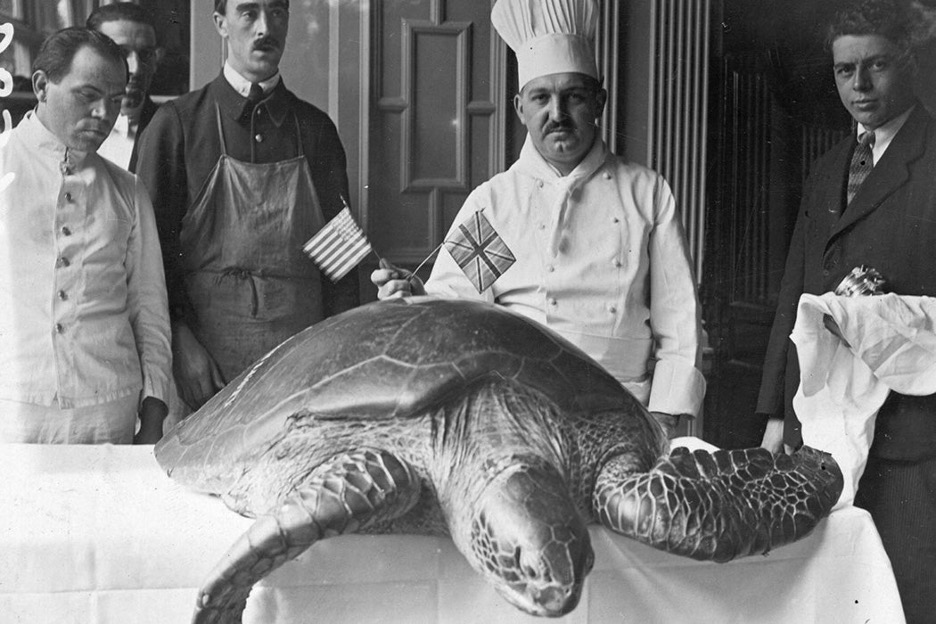
Figure 5 Chef getting ready to prepare turtle for green turtle soup, 1922, image credit: JSTOR.
Mock turtle soup, which was made with calf’s head, became the alternative and traveled worldwide like its turtle soup counterpart. Calf’s head was said to be similar texture-wise to turtles. In fact, the White House Cook Book, first published in 1887, called for calf’s head meat in its turtle soup recipe if there wasn’t enough turtle meat for the dish, noting that the eyes and tongue should be left out. The White House Cook Book’s calf’s head soup, or mock turtle soup, was said to be considered a delicacy itself and that “Mrs. Franklin D. Roosevelt served it at the White House May 17, 1939, to King George VI and Queen Elizabeth.”
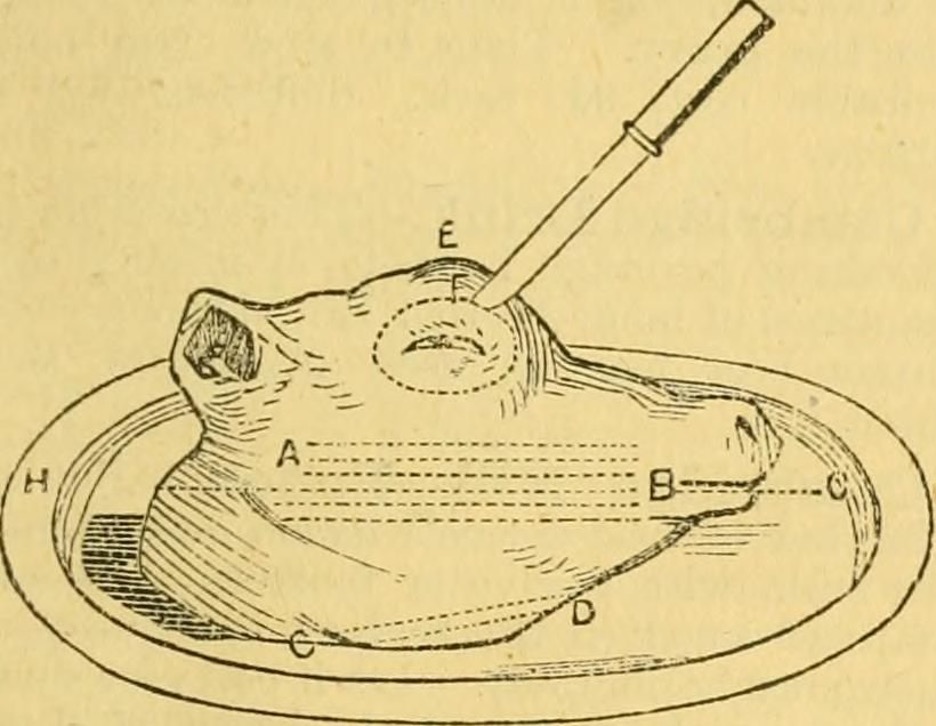
Figure 6 Diagram for carving calf's head, 1892. Public Domain.

Figure 7 The Roosevelts with King George VI and Queen Elizabeth, June 1939, Wikimedia Commons.
Though often more popular than turtle soup, mock turtle soup was a difficult dish to make at home, as processing the calf’s head was not a convenient task. Mock turtle soup did have some canned versions available for public consumption beginning in the late 19th century, but it was never a popular option and was discontinued.

Figure 8 Label from tin of mock turtle soup, 1906. National Archives.
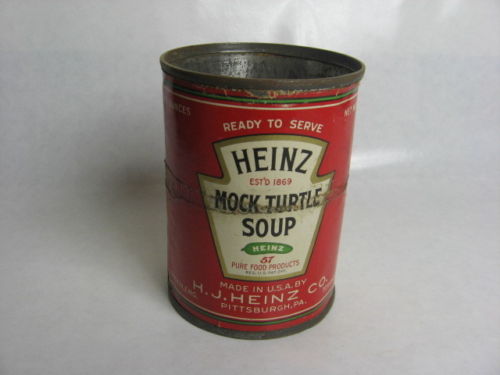
Figure 9 Heinz Mock Turtle Soup can, discontinued in the 1960s.
We hope you enjoyed our brief history of turtle soup, mock turtle soup, and the Colorado Railroad Museum’s collection of D&RGW holiday excursion papers. We are featuring two recipes for mock turtle soup, one from The White House Cook Book and the other from The Rocky Mountain Cook Book. If you decide you want to tackle the challenge of trying this soup at home, please be sure to let us know how it goes!

Figure 10 Denver & Rio Grande Colorado Springs Railroad Eating House Christmas Day menu, featuring mock turtle soup, 1871.
The Rocky Mountain Cook Book Mock Turtle Soup
Clean a calf’s head thoroughly, cut in several pieces, then soak an hour in cold water. Drain off the water, add four quarts of cold water and a tablespoonful salt and cook slowly until the meat slips from the bones. Remove the meat, but let the bones remain, then add:
5 cloves.
8 peppercorns.
5 allspice.
2 onions, sliced.
2 carrots, sliced.
1 turnip, sliced.
3 celery roots.
1 tablespoonful herbs.
Inch of stick cinnamon.
Let simmer for two hours, strain and set away until cold. Before serving, remove the fat and for every quart of stock, brown one tablespoonful of butter; when brown add one tablespoonful of flour, and gradually the stock. Season with salt and pepper if required. Cut in small dice one-half cup of the cooked meat to every quart and add to the stock with slices of hard-boiled egg or the yolk of egg made in little balls, the juice of half a lemon and thin slices of the rind, two tablespoonfuls of sherry. This can be omitted, if desired.
Rocky Mountain Cook Book General Rules for Soup Stock
Meat and bones for soup stock should be allowed to soak in cold water fully one hour before putting on the stove, to extract the juices. Soup stock should simmer on the back of the stove and not boil hard. The meat should be cut in small pieces and washed clean. Soup meat, when cooked, has no nutrition left in it. If properly made, the goodness of the meat is in the stock.
Use one quart of cold water to every pound of meat and bones. Add seasoning in the following proportions:
For every quart of water, one even teaspoonful of salt, three peppercorns, or a little ground pepper, two cloves, a celery root or the outside stalk, a sprig of parsley, a tablespoonful each of onion, carrot and turnip, a part of a bay leaf, a pinch of sage, summer savory, thyme and marjoram. It is not necessary to have all the herbs. A very nice flavored soup can be made with the vegetables alone.
If you wish to have a dark-brown stock, reserve part of the lean meat and part of the vegetables, and brown them in a little fat taken from the meat. A tablespoonful of browned sugar or caramel will also give a brown color to the stock. Do not remove the scum from the soup while it is cooking, as that is the albumen of the meat. As soon as the soup is done strain at once and set aside until cold and the fat has formed a cake on top. Remove the fat and reheat.
Soup stock should cook from six to eight hours.
The White House Cook Book Calf’s Head Soup
[Note: First catch your calf!] Scald a well-cleansed calf’s head, remove the brain, tie the head up in a cloth and boil an hour or until the meat will easily slip from the bone; take out, save the broth, cut the meat in small, square pieces and throw them into cold water; when cool, put the meat in a stewpan and cover with some of the broth; let it boil until quite tender and set aside.
In another stewpan melt some butter and in it put a quarter of a pound of lean ham, cut small, with fine herbs to taste; also parsley and one onion; add about a pint of the broth, let it simmer for two hours and then dredge in a small quantity of flour; now add the remainder of the broth and a quarter bottle of Madeira or sherry. Let all stew quietly for ten minutes and rub it through a medium sieve. Add the calf’s head, seasoned with cayenne pepper, salt, the juice of one lemon, a little pounded mace, and a dessert-spoon of sugar.