Tamale Pie, Spanish Beans, and Traquero and Bracero Women
As women’s history month draws to a close, and in honor of new enhancements in the Colorado Railroad Museum’s Traqueros: Mexican Trackworkers and the American Railroad exhibit, we are featuring the varied and integral roles women assumed during the Traquero and Bracero programs. To accompany this history, we are featuring the Southern Pacific (SP) Railroad’s tamale pie and Spanish beans recipes.

Figure 1 Traqueros working on the Atchison, Topeka & Santa Fe (AT&SF) railroad, photo courtesy Chillicothe Historical Society.
The Traquero Program, which peaked from 1880-1930, was notable in that women and families were encouraged to travel with the traqueros. These women were responsible not only for creating homes in the difficult environments they and their families lived in—primarily repurposed boxcars without temperature control—they also labored alongside their husbands, and often went on strike to better the working conditions for the men in their families. One stark example of this took place on Main Street in Los Angeles in 1903.

Figure 2 This 1910 map of the Pacific Electric shows the system immediately prior to its sale to Southern Pacific. The following year PE was merged with several other Southern California electric railways to form the worlds largest interurban electric system.
Traqueros working for the Pacific Electric (PE) Railway were going on strike to better their working conditions, particularly seeking higher pay and overtime for weekend work. The PE was a large interurban electric railway in the Los Angeles basin of Southern California. It would in 1910 be sold to the SP and become the largest interurban electric system in the world. When the PE brought in strikebreakers, in 1903, traquero women confronted them, urging them to join the strike and even taking tools out of their hands.
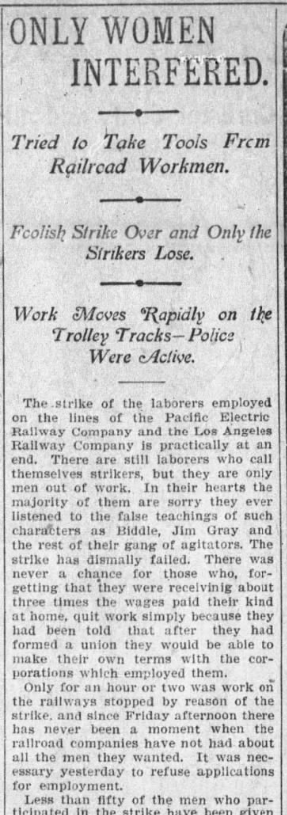
Figure 3 Los Angeles Times article about 1903 strike. The Times was notably anti-labor in its views at the time.
The Bracero railroad program ran from 1942-1945, and brought laborers from Mexico to fill the labor shortage in the railroad industry caused by World War II. Women and families were not permitted to come over with their bracero relatives, but that did not mean they still didn’t take an active role in advocating for their relatives. Communication across the Bracero program was poor, and families in Mexico often had no way to get in touch with their loved ones or even know where they were working. One of the ways women took an active role for braceros was by writing letters to locate their relatives. One woman even wrote a letter to the U.S. president requesting permission to be with her injured husband.
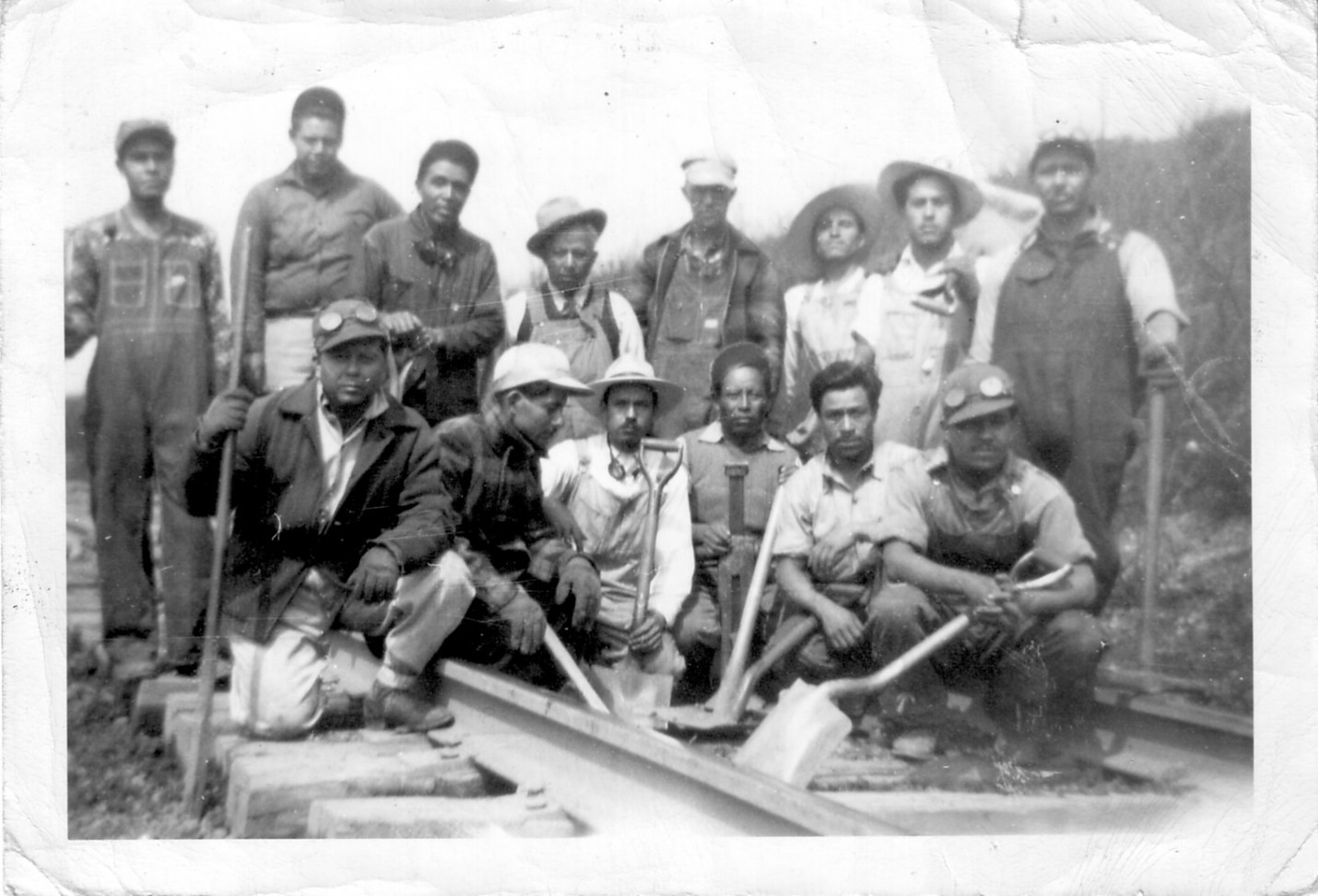
Figure 4 Bracero railroaders, Phoenix, Arizona 1944.
Josefa C. de Gomez, after learning of her son’s death as a bracero, demanded a full investigation. Relatives of braceros who died on the job were entitled to a $150 stipend while the bracero’s remains were interred in the United States. De Gomez refused that entitlement, traveled to America, and brought her son’s remains back home at her own expense.
The number of men leaving Mexico to work in the U.S. during WWII left Mexico with its own labor shortage that women were called on to fill. Food shortages were compounded by Mexico’s lack of laborers in the agricultural industry, which led to women protesting in Mexico.
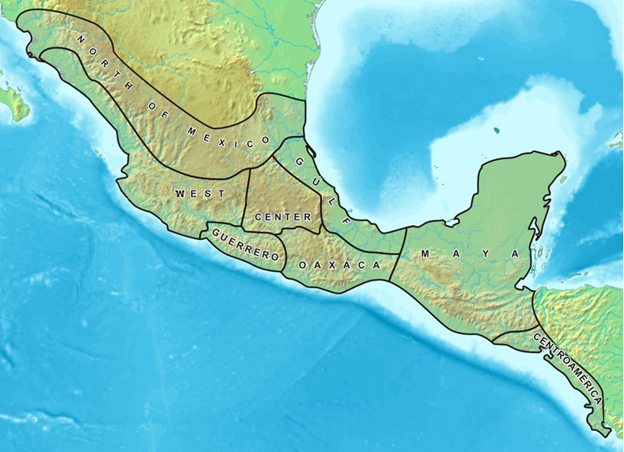
Figure 5 map of Mesoamerica.
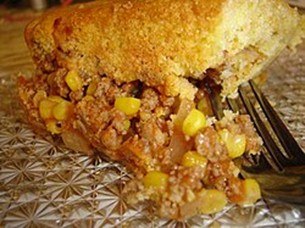
Tamales originated in Mesoamerica around 5,000 C.E. Tamales were a food source that were easier to prepare in bulk and easily transportable. The popularity of tamales spread, and in the 20th century they were a common food staple not just among Latin American cultures, but beyond. Tamale pie became an Americanized version of the dish in the 1900s—more of a casserole with some of the same ingredients—and was offered as a dining option on the SP railroad, highlighting the cross of cultures between the large Mexican and Mexican American workforce on that railroad.
Spanish beans similarly embodied the cross-cultural exchange of food. Though the Spanish subsisted on chickpeas and lentils previously, when they colonized Mexico in the 1500s, they brought various legumes native to Mesoamerica back with them, including pinto and kidney beans. The version of Spanish beans in the SP booklet, Our Dining Car Recipes: Southern Pacific likely isn’t from Spain at all, but referring to a Mexican style of preparing beans with spices.
On March 19th, 2026, the Colorado Railroad Museum—with a grant provided through the generosity of the Anschutz Foundation—unveiled four new kiosk stations that dive deeper into Traqueros exhibit content. This expanded content includes in-depth investigations into the exhibit’s featured artwork, and provides access to oral histories of traqueros and their descendants from the Kansas City Public Library (KCPL). A kiosk on the main level of the Museum’s depot building provides this expanded content, along with a digitized look at the exhibit for any patron who is unable to negotiate the stairs for access to the lower gallery. A final kiosk provides younger patrons with a chance to engage in exhibit content through activities. Traqueros: Mexican Trackworkers and the American Railroad—along with the kiosks—will be up through the end of August 2026.

Figure 6 Art Kiosk in the Traqueros exhibit which was unveiled in March 2026.
Today’s recipes come from a SP booklet called, Our Dining Car Recipes: Southern Pacific featuring recipes from various Southern Pacific chefs, many served aboard their dining cars. Different versions of this recipe book were published from the late 1920s through the 1940s. This version is specifically targeted toward housewives and the intro notes that cooking “is an art rather than a profession” and “is within the reach of any housewife…” If you try any of the recipes, please be sure to let us know!
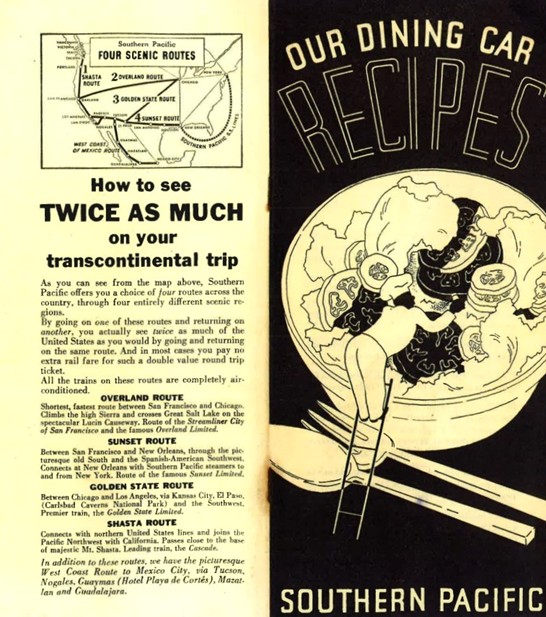
Figure 7 Our Dining Car Recipes: Southern Pacific booklet cover.
Southern Pacific Tamale Pie
(3 Servings)
1 cupful yellow corn meal
3 ounces butter
3 cupfuls water
½ lb. beef, ground
¼ cupful onions, minced
1 cupful tomatoes, pureed
Salt, paprika, white pepper
Chopped parsley, olives
Pinch of flour
Have water boiling. Add one ounce of the butter and make a mush the usual way. Coat buttered mold with mush before it cools. Melt remainder of butter in saucepan. Mix beef and onions, season, and saute thoroughly. Add flour, and when absorbed, tomatoes and parsley. Let cook until thick. Fill into mold, garnish with olives and spread the rest of mush over to cover. Bake for about 40 minutes in a fairly hot oven. [In today’s terms, a fairly hot oven refers to a temperature between 400°F to 425°F
Southern Pacific Spanish Beans
(10 Servings)
4 cupfuls (2 lbs.) kidney beans
1 quart tomatoes
1 lb. (minced) bacon
1 cupful (minced) onions
1 tablespoonful salt
2 tablespoonfuls sugar
¼ teaspoonful cayenne pepper
½ teaspoon baking soda
Pick beans clean, cover with cold water, add baking soda and bring to a boil. Let simmer for five minutes, drain, and wash. Cover with boiling water, add salt and let boil slowly for one and one-half hours. Heat bacon in frying pan, add onions, fry until lightly browned, then with tomatoes, sugar, salt and cayenne pepper add to beans. Let cook for about one more hour, or until done.